Ranking Higher in Google Maps

Imagine that you’re driving through an unfamiliar neighborhood, and decide you’d like to stop somewhere for a sandwich. How do you find the best local restaurant? If you’re like most of us, your answer is to use Google Maps, which has become the go-to for consumers seeking information about nearby businesses.

Every marketer and every business owner long to see their website traffic increase. While this is unquestionably a worthy goal, it’s important to remember that not all website traffic is created equal. Keep in mind that every visitor to your site is a living, breathing human being, and that the people who come to your website do so with varying levels of brand awareness and consumer intent.
Your Guide to Connected TV Advertising

Digital advertisers clearly have a lot of confidence in connected TV (CTV). According to data compiled by eMarketer, connected TV advertising will surpass $17 billion this year, and is expected to hit $21.4 billion by the end of 2023. Still, the question remains: Exactly where does connected TV advertising fit within your overall marketing strategy?
Best Practices for Review Generation

Before committing to most purchase decisions—whether that’s buying a new TV or simply trying out a pizza spot that just opened—consumers like to have some sort of social proof. That is, they like to see that other consumers have spent their own hard-earned money on the same product or service and found the transaction to be worthwhile. This social proof can sometimes take the form of a testimonial, but more often it is delivered via online reviews, posted to Google, Facebook, or Yelp.
Programmatic TV, Explained

TV advertising is nothing new; for generations, advertisers have spent top dollar in order to promote their products to viewers at home. And yet, the nature of TV advertising has changed considerably. One of the most significant innovations of the past decade is programmatic TV, which makes it easier for advertisers to purchase TV inventory based on the audience they want to reach…and to calibrate their spending accordingly.
Coming Soon: The All-New IMI Dashboard

Since 2006, enCOMPASS Advertising Agency has been leading the way in Search Engine Marketing (SEM), also known as Pay-Per-Click (PPC). With our exclusive Interactive Marketing Intelligence™ (IMI) platform, our clients consistently enjoy a distinctive advantage over their competition. And to widen that gap even more, we are excited to announce the upcoming launch of our all-new IMI dashboard!
Just Launched: The All-New IMI Dashboard

At enCOMPASS Agency, we specialize in interactive marketing plans that are unique for each client. We’ve trademarked the term Interactive Marketing Intelligence™ (IMI) because it’s what we do and what we do best. We’re thrilled to announce that the first phase of our all-new IMI dashboard has officially launched!
SEM Strategies to Address Inflation

Inflation has dominated this year’s economic news, a trend that may not ebb anytime soon; in fact, some economists have warned that a recession is all but inevitable. This reality obviously touches all of us in some form or fashion, but for advertisers in particular, there are some pressing concerns about marketing budgets. For this post we are going to focus on the impact it could have on Search Engine Marketing (SEM) in particular, and ways to address it.

Recently, Google announced that it would be phasing out Universal Analytics, replacing it with Google Analytics 4. This change is something of a mixed bag for experienced analytic trackers: While GA4 boasts many of the same metrics that were included in UA, it also offers a few new ones.
Prestige Motorsports

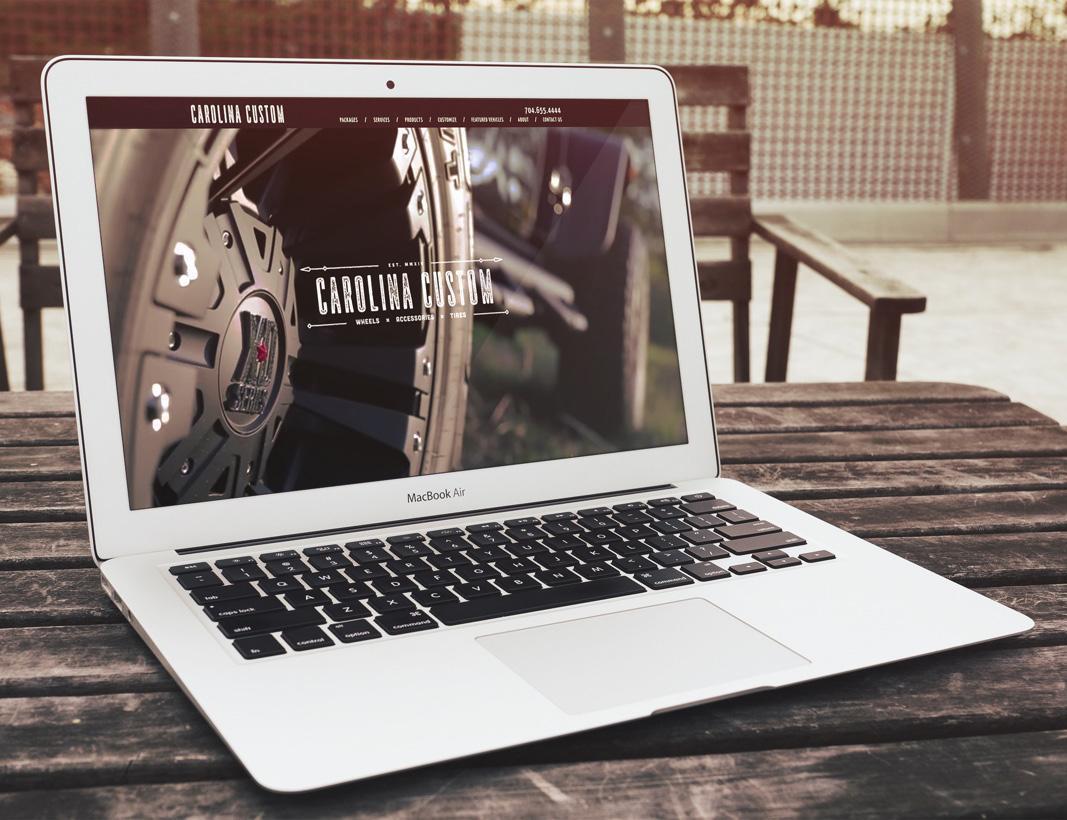
Two great companies come together to build something amazing! Starting with an exciting, souped-up, hot-rodder website and integrating it with a custom-built digital media strategy, we delivered accelerated traffic and powerful sales results that blows away all boundaries. Sounds fun, doesn’t it? Let us do the same for you.
ready to get started?
-
did you know?
A lot of our best work… is invisible.
We use microdata on all of the sites we build to make sure important details like address and business hours are passed on to Google and other search engines, making it easier for your customers to find you both on and off the web.